How to Score Automation Wins from Small Steps to Bold Moves
Blake Bearden and Sean Struve | 27 August 2025
Automation is not all or nothing. Many businesses start small, expand over time, or implement larger systems when the volume and complexity of their operations require it. The key is to choose the level of automation that aligns with your goals, growth plans and available resources. Automation technologies are used to automate tasks such as inventory management, order fulfillment and material handling, reducing manual intervention and errors.
Physical automation, such as robotics and conveyor systems, plays a key role in reducing manual labor and enhancing operational efficiency. Automation also improves worker safety by reducing repetitive strain injuries and minimizing exposure to hazardous or extreme environments.
By analyzing your current warehouse layout and understanding your unique challenges, we help you uncover automation opportunities and determine the best-fit solution to meet your goals.
Different Levels of Warehouse Automation
Low Automation
Focused on specific tasks or processes, these projects are quick to deploy and cost-effective. They often serve as an entry point for automation.
Examples:
Best for:
- Quick operational wins
- High-churn areas
- Teams new to automation
See how Sur la Table used sortation to boost accuracy and reduce labor needs. >>
Moderate Automation
Combines software, conveyors, and semi-automated processes to improve consistency and prepare for growth. These systems are more integrated and scalable.
Examples:
Best for:
- High SKU counts
- Improving accuracy and throughput
- Preparing for phased growth
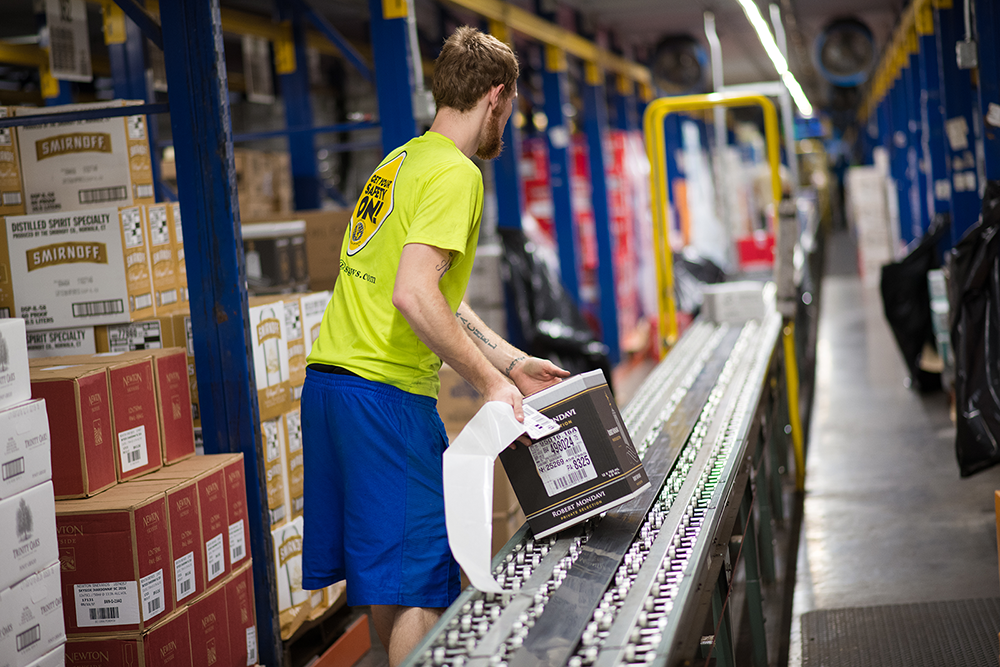
Explore Southern Glazer’s Wine & Spirits’ investment in integrated conveyance and sortation. >>
High Automation
Designed to maximize throughput, space efficiency, and labor independence, these systems are best for operations with high volume and complexity. Growing e-commerce companies are also increasingly adopting automation to compete against larger enterprise companies and keep tighter control of their costs.
Examples:
Best for:
- High-volume operations
- Long-term growth plans
- Strict SLA requirements
See how PUMA’s Torrance, California facility uses end-to-end automation to support omnichannel fulfillment. >>
How to Model ROI and Compare Inventory Management Options
Whether you're making a small upgrade or planning a full system buildout, a structured process helps you evaluate your options with clarity and confidence.
1. Analyze your data
Start by understanding your product mix, order volumes, growth patterns and seasonal trends. Identify pressure points and operational gaps.
2. Create a manual baseline
Project your future state without automation. Factor in labor requirements, space needs, and risks tied to turnover or missed service levels. Manual testing of current processes helps identify inefficiencies and areas where automation can deliver the greatest ROI.
3. Compare automation scenarios
Evaluate low, moderate, and high automation paths side by side. Weigh the trade-offs in cost, complexity and deployment timelines.
4. Balance financial and strategic outcomes
A comprehensive ROI model encompasses both measurable cost savings and operational enhancements, including improvements in safety, consistency, and flexibility. Automation investments can have a significant impact on supply chains by improving speed, reliability and sustainability. Key KPIs to track in ROI models include order accuracy, labor hours saved, picks per hour, space utilization, and service level adherence. Many automation projects also demonstrate payback periods of 2-4 years, with long-term benefits in labor stability and reduced turnover costs.
Putting It All Together for Operational Efficiency
Successful automation doesn’t require a massive overhaul. Many companies start with a specific challenge such as batch picking, sortation, or packing, and scale from there. Others, design end-to-end systems with long-term growth in mind.
In cold storage, for example, high-bay ASRS and pallet-handling systems help reduce energy use and minimize labor exposure to extreme environments. In e-commerce and retail, goods-to-person systems and automated packing protect service levels and streamline fulfillment. A warehouse management system is essential for coordinating these automated processes, optimizing inventory control and ensuring efficient warehouse operations. AI-enabled WMS and WES solutions now play a role in predictive slotting, labor forecasting and dynamic order routing, helping operations stay resilient in the face of supply chain disruptions.
What matters most is that your solution is driven by data, aligned with business needs and designed to grow with you. The right warehouse management system can support your automation project as it scales.
As a material handling automation integrator, Bastian Solutions helps companies of all sizes identify the right path. Whether you’re looking for a quick return on a focused project or building a facility-wide system, we provide the insight, design, and support to move forward with confidence.
Reach out to a Bastian Solutions expert to explore automation solutions that make sense for your operation.
Blake Bearden is a District Director with Bastian Solutions and works out of the greater Los Angeles area office. He graduated from the United States Air Force Academy with a degree in human factors engineering and has an MBA from Embry-Riddle Aeronautical University. Blake has experience with automation across a range of industries including 3PL, retail distribution, manufacturing, food and beverage, and e-commerce and omni-channel fulfillment.
Sean is a Director of Regional Solutions for Bastian Solutions, helping to support customers in Illinois, Missouri, Texas, Florida and the Northeast. With a background in industrial and manufacturing engineering, Sean works with customers to help align the right automation solution to address current challenges and position customers for success in the future. He has an Industrial and Manufacturing Systems Engineering degree from the University of Missouri-Columbia.
Comments
No comments have been posted to this Blog Post
Leave a Reply
Your email address will not be published.
Comment
Thank you for your comment.